

Table of Contents
Introduction
Modern digital work is faster than ever yet many teams still operate in confusion. Emails, chats, spreadsheets, and applications all have tasks that move around, but no one can see the whole process. Memory, follow-ups, and manual coordination are all important for work, but they can cause delays, mistakes, and stress at work.
This is where Lebhtes comes in.
Lebhtes is a structured workflow approach that turns scattered activities into connected operations. Instead of people pushing work forward step by step, the system routes tasks automatically based on rules and decisions. The result is predictable execution, clearer responsibilities, and smoother scaling as teams grow.
In this guide, you’ll learn what it actually means, how it works, when you need it, and how to implement it in real workflows from simple routines to full business operations.
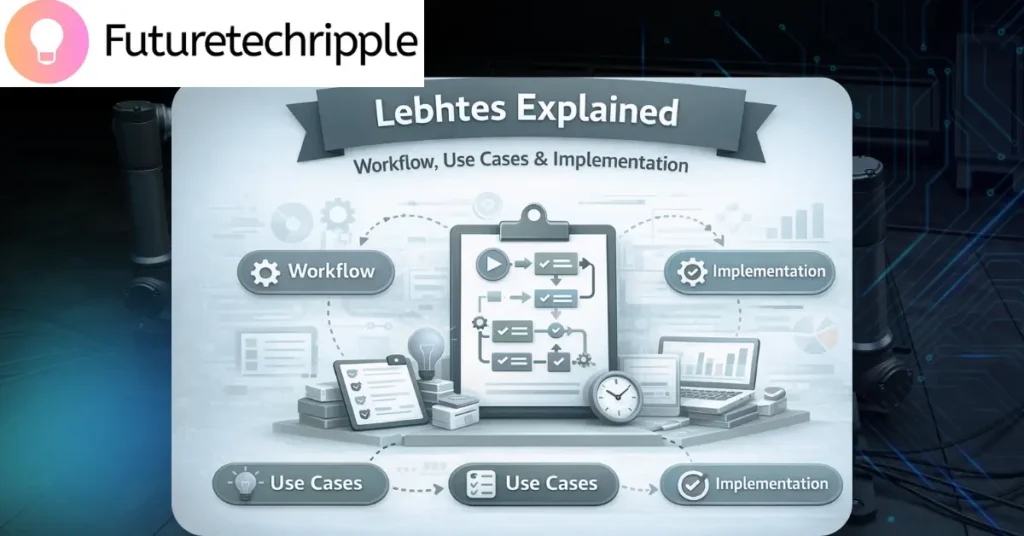
What Is Lebhtes?
Tools, choices, and automated actions are all connected into a single operational process using Lebhtes, a structured workflow orchestration system.
It,s uses conditional logic to route events so that activities take place automatically rather than requiring human task management across many apps.
In short:
An event happens → rules evaluate → the right action executes → results are recorded.
There is more than one piece of software involved.
This approach is known as a digital workflow architecture, which is a way of organizing tasks to make processes predictable, scalable, and repeatable.
The Significance of Lebhtes
Fragmented operations are a challenge for most teams:
- One app for all messages
- Tasks in another
- Files somewhere else
- Decisions happening in chat
- Updates missing everywhere
The result:
- Delays
- Confusion
- Manual work
- Mistakes
it fixes this by turning operations into an event-driven workflow.
Example
Without structure:
Customer order → employee checks payment → another employee updates spreadsheet → someone emails warehouse
With Lebhtes:
Order received → payment verified automatically → inventory updated → shipping created → confirmation sent
No coordination chaos.
Who Should Use it
it designed for environments where tasks repeat and teams grow.
1. Ideal Users
2. Growing startups
3. Agencies handling multiple clients
4. E-commerce stores
5. Operations managers
6. Customer support teams
Remote teams
Not Necessary For:
1. Solo freelancers with few tasks
2. Creative-only workflows
3.Operations managed without software workflows
When You Actually Need It
You need it when you notice:
1.Same task repeated daily
2.Team members asking “what’s next?”
3.Data entered multiple times
4.Delays between departments
5.Frequent human errors
If work depends on memory — not rules — you need it.
How it Works (Architecture)
it operates through five core components:
| Component | Purpose |
| Trigger Engine | Detects events |
| Logic Layer | Applies conditions |
| Decision Routing | Chooses correct path |
| Action Module | Executes tasks |
| Monitoring Layer | Tracks results |
Basic Workflow:
- Trigger occurs (form, order, email, request)
- Conditions checked
- Action executed automatically
- Status logged
This creates a repeatable operational system.
Core Principles Behind Lebhtes
Lebhtes is built on process engineering concepts:
- Event-driven operations
- Rule-based execution
- Integration architecture
- Task routing logic
- Operational transparency
The goal is not automation alone it is operational clarity.
Types of Lebhtes Implementations
1. Personal Productivity Lebhtes
Automates daily routines:
- reminders
- schedules
- follow-ups
2. Team Workflow
Coordinates departments:
- support tickets
- lead assignments
- approvals
3. Business Operations
Handles entire business processes:
- order fulfillment
- onboarding
- reporting
4. Intelligent Lebhtes
Uses decision patterns instead of static rules.
Step-by-Step: How to Implement Lebhtes
Step 1: Map Your Process
Write down:
- Inputs
- Decisions
- Outputs
Step 2: Identify Triggers
Examples:
- new order
- form submission
- payment confirmation
- support ticket
Step 3: Define Conditions
Example:
- IF customer type = VIP → priority handling
Step 4: Assign Actions
- send email
- create task
- update database
- notify team
Step 5: Add Human Approval (If Needed)
Critical decisions require verification.
Step 6: Monitor & Adjust
Check logs weekly and refine logic
Adoption Decision Framework
| Situation | Use Lebhtes? |
| Repetitive workflows | Yes |
| Growing team | Yes |
| High error rate | Yes |
| Creative-only work | No |
| Very low task volume | No |
Real-World Use Cases
1.Customer Support
Ticket created → categorized → assigned → reply template sent → manager notified if urgent
2.HR Onboarding
Employee hired → accounts created → welcome documents sent → training scheduled
3.E-commerce Operations
Order placed → payment verified → stock updated → shipping generated → invoice sent
4.Marketing
Lead captured → added to CRM → email sequence started → sales notified
Lebhtes vs Traditional Automation
| Feature | Automation | Lebhtes |
| Simple task execution | Yes | Yes |
| Decision routing | Limited | Advanced |
| Process visibility | Low | High |
| Scalability | Medium | High |
| Human approval steps | Rare | Built-in |
| Operational architecture | No | Yes |
it is automation plus structure.
Benefits of Lebhtes
Faster workflows: Since tasks are done automatically, workflows move faster and there are fewer pauses and waiting times.
Decreased errors: Compared to manual handling, rule-based execution guarantees fewer errors.
Clear responsibilities: To avoid misunderstanding, each job has an assigned owner or is assigned automatically.
Predictable results: Performance is measured because processes consistently yield the same results.
Advantages for Businesses
Scales with growth: Without hiring new employees, Lebhtes can manage a growing workload.
Enhances client response time: Automation expedites job routing, allowing for speedier delivery and responses.
Lowers operating costs: Less manual labor saves money, time, and resources.
Good things for the team
Less confusion: There is less doubt because everyone knows what needs to be done and who needs to do it.
Less work that needs to be done over and over: By automating boring tasks, teams can focus on more important projects.
Integrated processes: allow teams to work together and talk to each other better.
Limitations & Risks
1.Setup requires planning
2.Over-automation can break processes
3.Poor rules create wrong outcomes
4.Needs monitoring
Biggest Mistake:
Automating a broken workflow.
Fix process → then automate.
Readiness Checklist
Before implementing, confirm:
1.Process repeats frequently
2.Steps are clearly defined
3.Outcomes predictable
4.Tools connected digitally
5.Someone responsible for monitoring
If not — design workflow first.
Operational Maturity Stages
| Stage | Description |
| Manual | Humans manage everything |
| Assisted | Basic automation |
| Structured | Lebhtes applied |
| Optimized | Continuous improvement |
| Intelligent | Predictive operations |
Governance & Control
Good it systems include:
1.audit logs
2.permission levels
3.approval gates
4.error alerts
5.rollback procedures
Without governance, automation becomes risk.
Alternatives to Lebhtes
| Approach | When Better |
| Manual SOPs | Small teams |
| Simple automation | Basic repetitive tasks |
| AI assistants | Creative decision tasks |
| Project tools only | Task tracking workflows |
Common Mistakes:
1.Too many rules at start
2.No monitoring
3.Ignoring edge cases
4.Missing human approval
5.Automating exceptions
Best Practices:
1.Start with one workflow
2.Test multiple scenarios
3.Review weekly
4.Document rules
5.Expand gradually
Frequently Asked Questions
Q1. Is Lebhtes a tool or a method?
It is a workflow methodology implemented using digital systems and integrations.
Q2. Does Lebhtes replace employees?
No. It removes repetitive work while humans handle decisions.
Q3. How long does setup take?
Simple workflows take hours. Business processes may take days or weeks.
Q4. Can small teams use Lebhtes?
Yes, if tasks repeat frequently.
Q5. Is coding required?
Usually no, but advanced workflows may include scripting.
Q6. What problems does Lebhtes solve?
Operational confusion, delays, and manual errors.
Q7. Is it suitable for startups?
Very useful once operations begin scaling.
Q8. Can it work without integrations?
No, connections between systems are essential.
Conclusion
Lebhtes transforms disorganized work into organized processes.
Teams create processes that run automatically and reliably in place of handling tasks by hand.
Errors are decreased, roles are made clear, and organizations may grow without becoming chaotic.
The best way to get started:
1.Choose one repetitive process
2.Map the steps
3.Automate actions
4.Add approvals
5.Improve continuously
Structure first. Automation second.
That is the real power of Lebhtes.