
Table of Contents
Introduction
Managing digital processes gets harder as businesses grow and use hybrid cloud platforms, AI to run operations, and complicated legal frameworks. One design that combines governance, automation, and intelligence across cloud, on-premise, and AI systems is DGH A, which stands for “Digital Governance & Hybrid Automation.”
From corporate CIOs in New York to compliance teams in Los Angeles, DGH A helps with operational efficiency, risk management, and automation on a large scale. It can meet the needs of both B2B and B2C customers. Businesses that want to have safe, compliant, and smart operational control must understand this structure.
What does DGH A mean?
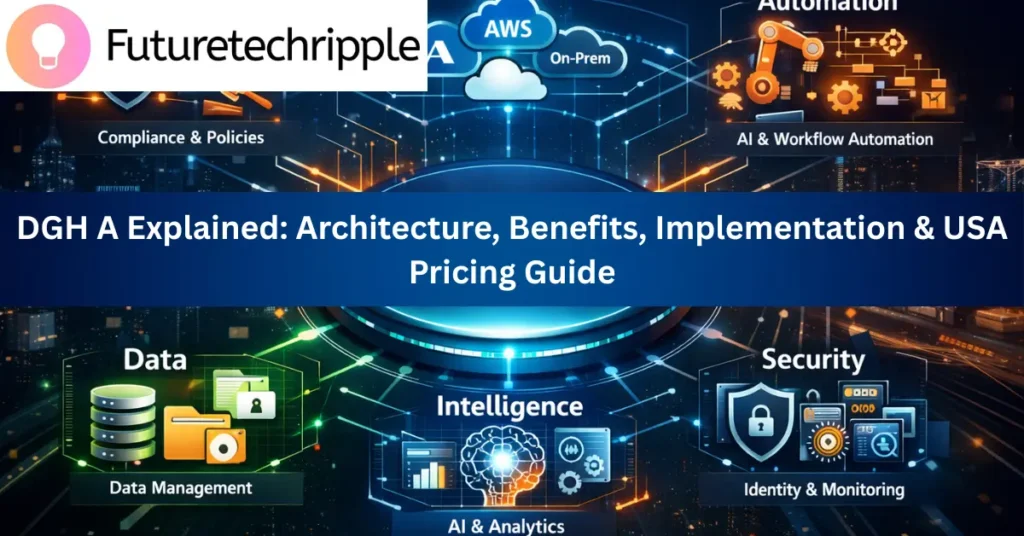
DGH A is not a single piece of software. Instead, it is an architectural structure that blends AI-assisted decision-making, digital governance, workflow automation, and compliance management. It lets businesses keep an eye on, simplify, and improve processes while still following rules and keeping operations safe.
Some important traits are:
Ready for automation: Works with RPA and AI systems to make processes run smoothly.
Coverage for compliance: Meets GDPR, HIPAA, SOC 2, and FedRAMP standards
Cons: It doesn’t work in AWS, Azure, or GCP settings.
Governance policy engine: rules and processes are controlled from one place.
For example, a healthcare company may use AI to analyze patient data.
However, it must also maintain HIPAA compliance.
DGH A automatically ensures that the AI accesses only authorized data and every action is recorded in an audit log.
Why DGH A Is Important
The move to digital has created hybrid IT environments that can’t be managed well with standard control models. It fills in these holes by:
- Getting rid of operating and legal risks
- Making technology and decision-making better
- Making it easier to combine mixed cloud and AI
- Increasing openness by enforcing policies from one place
Without this kind of structure, organizations have trouble integrating new systems, pay more, and accept automation more slowly. This is why it is so important for long-term growth.
Who Should Adopt DGH A?
- Companies that run mixed cloud systems
- AI-driven companies that need automated control
- Industries that are regulated, like healthcare, banking, and fintech
- SaaS companies that want to automate workflows on a large scale
Compliance, automation, and cloud operations can all work better together, and even mid-sized businesses can gain.
How DGH A Works: In Simple Steps
Define Governance Policies: Set rules for process, access control, and compliance.
Connect cloud platforms: AI bots, old systems, and APIs to make systems work together.
Automate Decision Paths: Set up processes that are based on rules and are helped by AI.
Monitor and audit: Reporting, logging, and compliance checks all the time.
Intelligence: can help you improve processes by using data and feedback loops.
This organized method makes sure that processes are scalable, legal, and effective.
Core Parts of DGH A
| Component | Function |
| Governance Layer | centralized rules, enforcement of compliance, and access control |
| Automation Layer | Workflow engines, orchestration, AI-driven automation |
| Layer of Data | Sorting data, keeping track of its history, and safe storing |
| Intelligence Layer | AI models, decision engines, and analytics |
| Security Layer | managing identities, keeping an eye on things, and finding threats |
All of these layers work together to make a full digital government system.
What DGH A Is Used For by Industry
Enterprise IT: control in a hybrid cloud and automatic compliance reports
Medical Care: AI is used by a doctor to diagnose patients, yet patient data is protected since DGH A prevents unwanted access.
Money: When a suspicious transaction is discovered, the bank automatically creates a compliance report.
SaaS: Billing and access rights are immediately adjusted when a client upgrades a plan.
Each application can be changed to fit the needs of the company and meet compliance standards.
DGH A vs. Previous Techniques
| Feature | DGH A | Traditional IT |
| Automation | Adaptive & AI-assisted | Manual or static |
| Compliance | Built-in, continuous | Add-on, periodic |
| Scalability | ready for hybrids | Limited |
| AI Integration | Native support | Minimal |
| Cloud Compatibility | Multi-cloud | Platform-specific |
The comparison shows why businesses are choosing DGH A over older options.
Possibilities and Cons
Pros
1.Unified management of all systems
2.Better AI and robotics decision-making
3.Getting rid of compliance risk
4.Architecture that can grow for mixed IT settings
Cons
1.The initial difficulty of operation
2.Needs coordination between teams
3.Work to integrate old tools.
4.Platforms, tools, and ways
Some common tools that help DGH A are
BPM Workflow Engines: These are used to organize complicated processes.
Identity and Access Management Systems: Security that is centralized
Cloud providers: AWS, Azure, and GCP
AI Decision Engines: Automating rules and making predictions
Tools for keeping audit logs and making reports: constant tracking
Choosing the right mix relies on the size, complexity, and compliance needs of the company.
DGH: A Framework for Implementation
When to Put It in Place:
- Increasing the size of activities across various cloud environments
- Increasing requirements for compliance
- Problems with automating workflows
Steps for Implementation:
- Find out about the current processes and control holes.
- Set objectives for technology and rules for compliance.
- Pick out platforms and tools (like workflow engines and AI systems).
- Connect and organize processes.
The best ways to:
- Pilot project before full-scale rollout
- Bring together the IT, compliance, and business people.
- Write down rules and procedures.
Pricing and Cost Factors in the USA
| Size of Deployment | Estimated Annual Cost |
| Small / Mid-market | $50k–$80k |
| per year; Enterprise | $100k+ |
Things that affect cost:
- Number of systems that work together
- Coverage for compliance (HIPAA, SOC 2, FedRAMP)
- How much robotics and AI are used?
- Expertise of the provider and area
How to Pick an American DGH Provider
To-do list:
1.Proven track record in both hybrid technology and control
2.Knowing how to follow HIPAA, SOC 2, and GDPR rules
3.Ability to connect to multiple clouds
4.Clear prices and options that can be scaled up
5.Key US towns like New York, Los Angeles, and Chicago all have local presences.
Changes to search:
- “DGH A consultants near me”
- “New York is served by Enterprise DGH A.”
- “Initial costs for DGH A in the US”
Common Mistakes and Warnings About Risks
1.DGH A being treated like a piece of software
2.Not dealing with change properly
3.Too much automation without limits for government
4.Not planning for audits and compliance
Getting rid of these risks will ensure ROI and organizational stability.
Different Ways to Use DGH: A Different Use Case
1.The usual GRC tools focus on compliance only.
2.Platforms for RPA Automating specific tasks
3.ERP Extensions Workflows focused on finances
When full control, hybrid automation, and AI readiness are needed, it is the best choice.
In conclusion
DGH A is a new way of thinking about digital governance and hybrid automation. It gives businesses processes that are scalable, ready for AI, and aware of compliance. Businesses in the USA can lower their risks, improve the speed of their process, and get the most out of their cloud and AI investments by adopting them carefully.
It’s important to plan ahead, choose the right tools, and find approved providers when adopting DGH A, but the long-term operational and legal benefits make it an important investment for 2026 and beyond.
A Lot of People Also Ask
1. What is DGH A? Is it software or a framework?
DGH A is not a single piece of software; it is an architectural structure that combines control, automation, and AI.
2. Who does DGH A help the most?
Businesses, sectors with rules, SaaS providers, and AI-driven groups.
3. Can DGH A be used by a small company?
Yes, especially those who want to plan for both mixed automation and legal scalability.
4. How much does DGH A cost in the U.S.?
Large-scale projects cost more than $100,000 per year, while small deployments cost between $50,000 and $80,000 per year.
5. How long does it take to put things in place?
3 to 9 months, based on how complicated it is and how well the systems work together.
6. Does DGH A take the place of cloud platforms?
No, it controls and improves systems that use AI, the cloud, and processes.
7. What are some mistakes people often make when adopting DGH A?
Ignoring audit planning, skipping change management, or installing too much software without proper oversight are all examples of bad practices.
8. How does DGH A make people more likely to follow the rules?
By implementing centralized rules, automated reporting, and controls that are ready for audit that are in line with GDPR, HIPAA, and SOC 2.
9. How is DGH A different from RPA or ERP?
DGH A has unified administration, AI integration, and support for multiple clouds. RPA or ERP, on the other hand, tend to focus on separate automation or finance tasks.