

Table of Contents
Introduction of Repmold
One of the most significant changes in the history of the production business is happening now. Automation, AI, and digital innovation are coming together to change the way that goods are created, made, and sent out. Repmold is at the heart of this change. It is a revolutionary solution that combines accuracy, economy, and sustainability into a single ecosystem.
The “next big leap” in digital production for 2025 is Repmold. But what is the importance of that? Let us discuss the following aspects: its meaning, how to make use of it, what positive effects it may have, and some real-world instances of how it functions.
What Is Repmold?
Repmold is the next wave of digital industrial technology. It is meant to make production more efficient and environmentally friendly. It’s like a smart industrial system that combines: Simulating and drawing things digitally Use of sustainable materials Quality control that is automated AI-driven improvement of efficiency Repmold lets makers create, test, and make digital copies of models or production cycles before they are used in real life. This cuts down on costs, waste, and time.
A few words that describe repmold are:
1.Digital manufacturing
2.Smart production,
3.Mold copying
4.Sustainable design
5.Advanced manufacturing technology.
Why Repmold Is Important in 2025
There is a lot of pressure on the manufacturing business around the world to cut prices, speed up, and leave less of a carbon footprint. And this is what makes Repmold unique:
Sustainability: Repmold focuses on making products that are good for the environment and produce little trash.
Speed to Market: Digital modeling cuts the time it takes to make a prototype by a huge amount.
When matched with predictive tools like our FREHf 2025 guide, businesses can ensure quicker launches that perfectly match market demand.”
Cost-effectiveness: Simulating models before they are made cuts down on mistakes and the cost of redoing work.
Portability: It may be used in many fields, including as consumer electronics, healthcare, automotive, and aerospace. It helps research and development by making it easier and better to try out new materials.
A 2025 Deloitte study says that 67% of US makers are spending money on digital manufacturing technologies like Repmold to stay ahead of the competition.
How it Works
Repmold Now, making things isn’t just about tools, molds, and people; it’s also about smart systems that combine AI, sustainability, and digital accuracy. it is one of the most exciting tools that is making this change possible.
Step 1: Making a digital design Engineers start the process by using CAD (Computer-Aided Design) tools to make a 3D digital model of the mold or object. High accuracy gets rid of mistakes made by humans in design. You can use and change digital models by saving them. Allows for quick testing of various design changes. As an example, a US electronics company created three prototype cases online in just 48 hours, whereas the old way of doing things would have taken weeks.
Step 2: Tests and simulations online Repmold uses models to test how well it works, how long it lasts, and how much stress it can handle. Attempts to guess how things will act in the real world. Finds flaws before the creation process starts. Less time and money are lost. Companies that use digital modeling tools say that the cost of testing goes down by 30–40%.
Step 3: Optimization based on AI After the tests are over, AI programs make the design more efficient. Offers better mixes of materials. It is more sustainable since it creates less trash. Modifies the design to save costs and speed up production.
Step 4: Making a physical copy The best design is then made to look like it did in the computer. It is done with 3D printing or automatic shaping. Makes sure that the computer model and the real result are identical. Cuts down on trial and error by more than 60%.
Step 5: Monitor in real time and connect IoT devices IoT monitors keep an eye on quality, performance, and speed while the product is being made. Bugs are found early on in the process. Sends out alerts for planned repair. Allows producers to keep an eye on activities from afar. A car company cut down on downtime by 25% by using Repmold’s IoT-powered tracking system.
Step 6: Always getting better and giving feedback on data Repmold doesn’t just make things; it also learns from them. You can use the data from each project again and again. Over time, machine learning makes ideas better. Faster R&D that encourages new ideas.
Check out our detailed guide on Duaction
Important Things About Repmold
To be successful, companies are searching for methods to manufacture goods that are quicker, work better, and are better for the environment. it is the name of the next kind of digital manufacturing systems. These systems have been developed to be affordable, good for the environment, and utilize the latest technology. What makes Repmold different, though? The answer lies in how strong it is. We’ll talk about the most important parts of Repmold and show you how they’re changing businesses in the real world.
1. Design Optimization
Driven by AI Repmold uses algorithms based on artificial intelligence to find errors in designs and make them better automatically. Getting rid of design mistakes before they happen suggests different products that are more eco-friendly makes the goods last longer and costs less Example: An aircraft business cut down on waste by 22% by using AI to improve Repmold optimization.
Repmold streamlines product design and prototyping, and Schedow and other supplementary applications manage shadow manufacturing duties for a more efficient process.
2. Simulation of a digital twin
The tool lets companies make a digital copy of models before they start making them in real life. It basically runs tests for stress, longevity, and performance Avoids expensive try and mistake Makes R&D and development go faster
3. Making things with the environment in mind
Repmold stresses environmentally friendly ways to make things. Supports materials that can be recycled and grown again Lowers the amount of energy used in production cycles Helps businesses reach their goals for lowering carbon emissions
4. Flexibility across industries
It can be used in many fields, unlike rigid industrial tools. Automobile The space Medical Care Electronics for consumers The building and packaging This makes it future-proof in a wide range of areas.
5. The cloud and the internet of things
Fitting in Cloud computing and IoT-enabled sensors make it possible to link manufacturing environments. Allows teams and places to work together in real time Tracks the success of production from afar Sends maintenance warnings ahead of time to avoid downtime
6. The power for any business to grow
It can grow with the needs of any business, from small businesses to global corporations. Small businesses can try new goods for a low cost. Large companies can run production at multiple sites at the same time. Modular design lets acceptance happen over time.
7. Analytics for Prediction
It can see problems coming and fix them before they affect production by using data insights. Plans for problems in the supply chain Finds risks in quality control Improves ordering and the distribution of workers.
For professionals looking for advanced industrial tools, explore PLG Supplies 2025 for high-performance equipment that complements modern digital manufacturing.
5 Powerful Innovations in Repmold
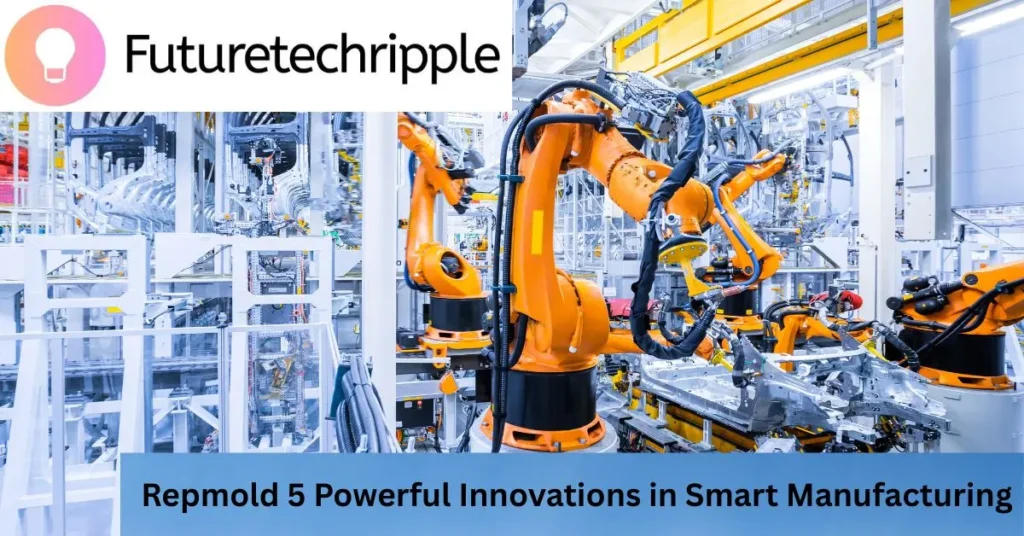
Repmold is a big step forward in the field of smart digital manufacturing. It uses advanced robotics, data analytics, and AI to make a production system that works better and lasts longer. The tool is meant to cut down on waste, improve the accuracy of products, and speed up production. Here are five amazing new features that make Repmold a huge deal in the world of industrial technology.
1.Process Improvements Driven by AI
Repmold uses AI to keep an eye on and improve every step of the production process. It changes factors like temperature, speed, and pressure on its own to get better accuracy and output. Human mistake is kept to a minimum, and the quality of the products is always the same.
2.Simulation of a digital mold
Engineers can create and test molds online with Repmold before making them out of metal. Before real production starts, this simulation method helps find possible flaws, improve mold performance, and cut down on material use and costs.
3.Long-term integration of materials
Sustainability is a big part of Repmold’s creation. The method supports materials that are good for the environment and can be recycled. This lets businesses meet global green production standards while also having less of an effect on the environment.
4.Quality Control in Real Time
Repmold uses data and smart tools to keep an eye on every step of the production process in real time. This makes sure that every mold meets high standards of quality, which means that the finished goods are more reliable and have fewer flaws.
5.Production management in the cloud
Repmold’s cloud connectivity lets manufacturers exchange data, manage workflows, and keep an eye on performance from anywhere. People from distant places may work together and make choices more easily because of this real-time connectivity.
Uses of Repmold in the Real World
It isn’t just a trendy word in the world of digital manufacturing; it’s a real, game-changing answer that’s already being used in many fields. it is cutting costs, cutting waste, and speeding up product creation by combining AI, digital twins, and eco-friendly production methods. But exactly where is it having the most of an effect? Let’s look at how it can be used in the real world in 2025. Repmold’s computer modeling helps car companies cut prototyping time by up to 40%, which speeds up the process.
Flexible components: AI-driven design helps make electric vehicle (EV) parts that are stronger yet lighter.
Modification: Manufacturers may make versions that work better in certain regions more quickly.
Aerospace and Defense Durability Testing: It digitally mimics harsh circumstances like temperature, pressure, and stress before the product is made.
Fuel Efficiency: Replaming makes lightweight plastic parts that help cut down on fuel use.
Safety Standards: Higher accuracy makes sure that strict flight rules are followed. Medical Equipment and Health Care Personalized medicine: Repmold-driven digital models are used to make custom limbs and implants.
Precision Tools: Surgical tools are digitally optimized to make them more comfortable to use and last longer.
Read our guide on Fonendi 2025 for healthcare tech
Faster R&D: The time it takes to test pharmaceutical packages and tools is cut down. Tech companies can make new models fast and with fewer mistakes when it comes to consumer electronics. It’s excellent for the environment that companies make gadget cases out of products that can be recycled.
The process of minimizing: Making smaller, more complex electrical parts requires more time and effort. Eco-friendly designs for sustainable packing: Repmold helps make packaging that uses 20–30% less material.
Circular Economy: It uses recycled materials to make models for packing. Consumer packaged goods (FMCG) businesses use Repmold to meet their environmental goals.
Construction and Architecture Prefab Components: Digital cast copying makes building premade homes faster. One example of sustainable materials are composites that are fabricated using recyclable components and combinations of eco-friendly concrete.
Reliability in Design: It is common practice for architects to create virtual prototypes of prospective constructions prior to committing to actual versions.
Advantages and disadvantages of Repmold
There are pros and cons to every new tool available. Here is a fair description of Repmold to help you make your decision:
Pros of Repmold
Reduce development: The creation of models may be improved by the use of digital models, which have the ability to reduce development time by as much as forty percent.
Cost-effectiveness: Decreased trial and error, which leads to cost reductions on both products
Sustainability: Through the reduction of waste and the use of recycled resources into manufacturing, it contributes to greener production.
Fewer errors and improved: product quality are the results of optimization that is based on artificial intelligence.
Flexibility Across Multiple Industries: It has the ability to be employed in a variety of industries, including technology, healthcare, cars, and aerospace, among others.
Scalability: suitable for both small firms experimenting with new concepts and huge corporations managing operations on a global scale.
Decisions Based on Data: Predictive analytics stops mistakes before they happen.
Cons of Repmold
It costs a lot to set up the advanced digital infrastructure that small producers need.
Skill Needs: The company needs workers who know how to use AI, CAD, and digital production.
Dependence on Technology: Depends on stable internet, IoT devices, and cloud platforms a lot.
Updates All the Time: To stay up to date, you need to keep your tools updated and train your staff.
Problems with integration: it might need to be changed to work with old production systems.
The pros of Repmold, like making production faster and more environmentally friendly, are much greater than the cons, especially for businesses that want to go digital.
Frequently Asked Questions About Repmold
Q1: What is the only business that can use Repmold?
No, it can be used by both small businesses and large corporations because it is made up of separate modules.
Q2: How does it make things last longer?
Digital models help cut down on waste, recovered materials are used more, and less energy is used.
Q3: Does Repmold fully take the place of standard mold-making?
Not all the way through. Despite the fact that it accelerates and improves the process, there are certain firms that may still want to conduct their business in the traditional manner for specific reasons.
Q4: Can Repmold be used with other production systems?
Repmold does work with most digital production and ERP systems.
Q5: Which fields will gain the most from Repmold?
The automobile, aviation, electronics, healthcare, and packaging sectors are the top users.
Final Thoughts on Repmold
Repmold is changing the way smart digital manufacturing is done by combining AI, digital twin models, eco-friendly materials, and cloud-based production management. Businesses can create, test, and make goods faster, more accurately, and with a lot less waste thanks to it. This makes production both cheaper and better for the environment.
Its method can be changed and expanded to fit many different fields, like automobiles, aerospace, healthcare, consumer electronics, and packaging. This lets businesses of all kinds come up with new ideas and stay ahead of the competition. It costs money and trained individuals to set up complex digital systems, but the benefits faster time-to-market, higher product quality, more environmentally friendly manufacturing processes, and choices based on data far exceed the disadvantages.
Repmold is no longer just a tool for creating things; it’s a game-changing solution that fosters new ideas, boosts growth, and lets firms fully implement the next generation of digital industrial technology as we go into 2025 and beyond.